
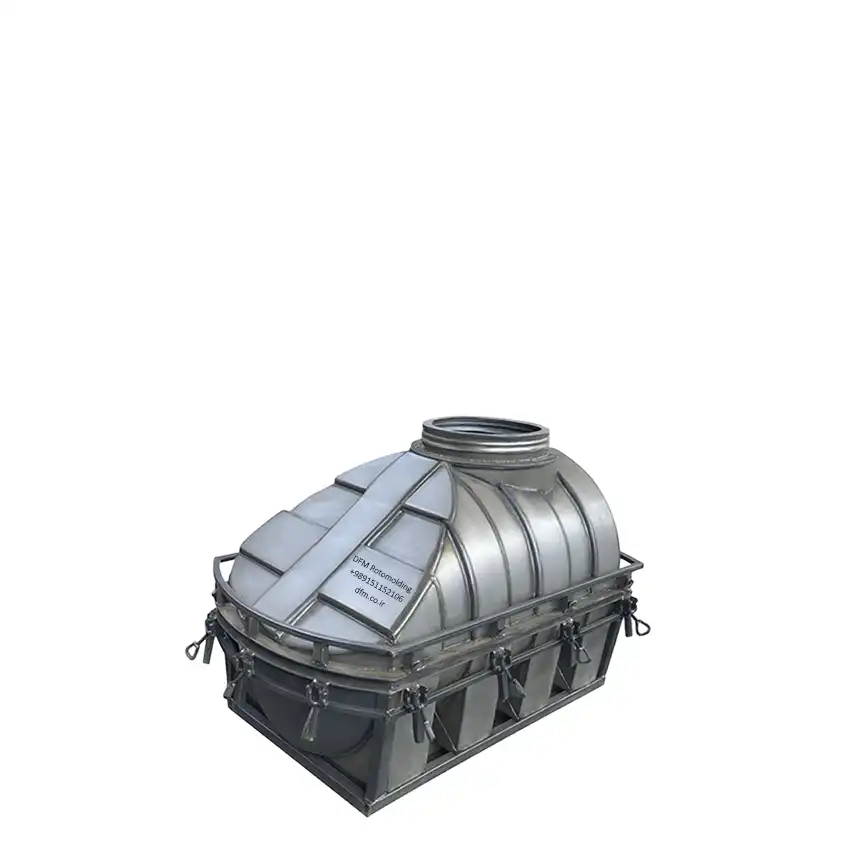
Designed and Manufactured by Davaran Fydar Maham Co.
Design and Application of Under-Stair Tanks
Under-stair water tanks, as their name suggests, are specifically designed to efficiently fit into the unused space beneath staircases in houses, buildings, and industrial facilities. This type of tank offers a smart solution for utilizing wasted spaces in buildings, saving valuable floor area and enhancing the functional value of the structure.
Material and Build Quality
Under-stair tanks produced by Doran Fidar Mahaam are made of polyethylene.
This material, due to its numerous advantages, is an ideal choice for manufacturing both industrial and domestic water storage tanks.
Advantages of Using Polyethylene
- Lightweight compared to stainless steel tanks
- Suitable for storing drinking water, acids, pesticides, and various chemicals
- High tensile strength and resistance to impact and pressure
- Usable in any temperature and weather condition due to its high coefficient of expansion and contraction
- Easy repair of damaged areas
- No chemical interaction with the liquids stored inside the tank
- UV-resistant (resistant to ultraviolet radiation and sun damage)
Rotational Molding and Production Capabilities
The rotational molding tool for the 500-liter under-stair tank is also designed and manufactured by Doran Fidar Mahaam.
Customers can purchase this mold if desired.
Mold Specifications
- Mold material: ST37 steel sheet
- Standard threaded insert in the tank lid is already included in the mold
- Possibility to add extra inserts in the mold for embedding brass fittings or other required fittings in rotational molding
Specialized Services by Doran Fidar Mahaam
With over 15 years of experience in the rotational molding industry, Doran Fidar Mahaam is proud to offer specialized services to its customers, including:
- Structural analysis and optimization of tank designs
- Mold repair and correction
- Turning customer ideas into real, functional products
The Process of Turning an Idea into a Product
Our experienced engineers, leveraging years of technical expertise, follow a fully engineered process:
- Receiving the customer’s idea
- 3D modeling of the concept
- Conducting necessary analysis and simulations to identify and resolve potential flaws or issues
- Design optimization to improve product quality and durability
- Final approval from the customer
- Mold production and delivery to the customer
This process is carefully engineered to prevent economic losses, time waste, and unnecessary risks for both parties, ensuring a smooth and reliable path from concept to final product.