
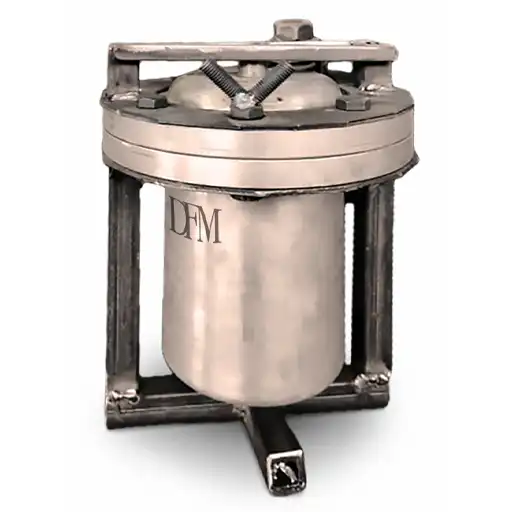
Designed and Manufactured by Davaran Fydar Maham
Application and Importance
Impact bumpers are used to prevent collisions between machinery, vehicles, or equipment and columns, walls, or other vulnerable areas in industrial environments.
They are widely used in steel structures (sulah), factories, warehouses, and production centers, serving as an essential safety and protective system.
Material and Benefits of Polyethylene
Impact bumpers are manufactured by Davaran Fydar Maham using polyethylene, a durable and versatile material ideal for industrial applications.
Advantages of Using Polyethylene
- Cost-effective — due to domestic raw material production in Iran
- UV-resistant — no discoloration or cracking under sunlight
- High resistance to stress and brittleness — withstands strong impacts without cracking
- Easy repairability — damaged parts can be quickly fixed without specialized tools
- Suitable for all weather conditions — thanks to high expansion and contraction coefficient
Mold Fabrication and Production Process
The mold for this product is made of aluminum.
After creating the 3D model of the product, the machining process begins either manually or using CNC machines.
Final Mold Production Steps
- Precision machining of the mold based on the design
- Surface polishing (if required) for improved finish
- Delivery of the ready-to-use mold to the customer
Benefits of Aluminum Molds
Rotational aluminum molds, compared to steel sheet molds:
- Provide better heat distribution during the molding process
- Result in more uniform curing (better baking)
- Produce final products with higher dimensional accuracy and surface quality
Advanced Mold Features
The following capabilities are integrated into the mold:
Insertion of Components and Fittings
- Ability to embed metal inserts for creating threads or installing brass and plastic fittings
Branding Options
- Option to register the customer’s company logo on the final product
- Can be implemented as raised or recessed
Specialized Service: Turning Ideas into Products
If you have an idea for a specific product but don’t know how to bring it to life, Davaran Fydar Maham is ready to assist.
Idea-to-Product Process
- Receiving the customer’s initial idea or sketch
- Designing the initial 3D model using specialized software
- Optimizing and making necessary adjustments to the design
- Performance simulation under real-world conditions using engineering software (e.g., ANSYS, Abaqus)
- Predicting and resolving defects before physical production
- Mold production and delivery to the production line or customer
This precise, engineering-driven process prevents wasted time, expenses, and defective product manufacturing.