
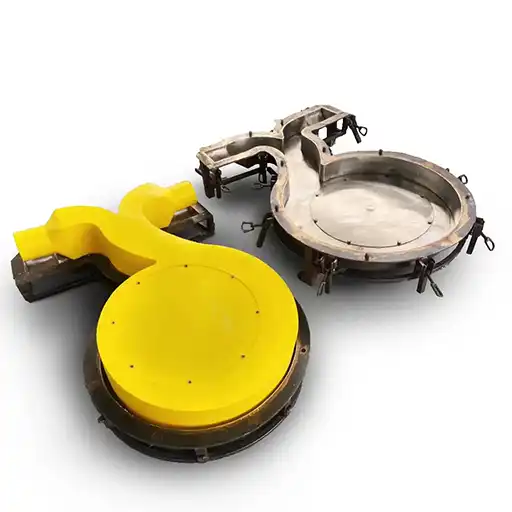
Designed and Manufactured by Davaran Fydar Maham
Function and Application
The air outlet duct is a key component in agricultural sulfur blowers, responsible for dividing and directing the airflow generated by the fan.
It ensures even distribution of sulfur and powdered pesticides across the field, significantly improving the machine’s efficiency.
Material and Benefits of Polyethylene
This product is made of polyethylene, a durable and versatile material ideal for industrial and agricultural applications.
Advantages of Using Polyethylene
- High resistance to mechanical stress — withstands impact and pressure in harsh conditions
- High expansion and contraction coefficient — performs reliably in all weather conditions
- Easy repairability — damaged parts can be quickly fixed without specialized tools
- UV-resistant — no discoloration or cracking under direct sunlight
- Low cost — due to domestic production of raw materials in Iran
Domestic Raw Material Production and Cost-Effectiveness
Iran possesses abundant oil reserves, enabling full domestic production of polyethylene.
This means:
- No need to import expensive foreign materials
- Significant reduction in production costs
- Allows manufacturers to produce high-quality products at competitive prices
Mold Fabrication and Production Process
The mold for the air outlet duct is made from ST37 steel sheet, fabricated with high precision and in accordance with industrial standards.
Technical Features of the Mold
- Integrated metal inserts for embedding brass fittings
- Ability to add threaded inserts for tank lids or other parts
- Optimized design to reduce waste and improve production quality
This mold is ready for use in the rotational molding (rotomolding) process.
Specialized Service: From Idea to Final Product
Both the product and mold were fully designed and manufactured from scratch by Davaran Fydar Maham.
With over 15 years of experience in rotational molding, we are ready to provide specialized services to our customers.
Idea-to-Product Process
- Receiving the customer’s initial idea or sketch
- 3D modeling using specialized software (e.g., SolidWorks)
- Performance simulation in software environments (e.g., ANSYS, Abaqus)
- Predicting and resolving defects before physical production
- Design optimization to improve durability and reduce costs
- Mold production and delivery to the production line or customer
This precise, engineering-driven process prevents wasted time, expenses, and defective product manufacturing.