Introduction
Burn marks are among the most common defects in the rotational molding process, significantly affecting the quality, appearance, and mechanical performance of finished polyethylene products. This defect is typically caused by excessive processing temperatures, improper heating cycles, uneven heat distribution, or the use of low-quality raw materials.
In the production of polyethylene tanks and other rotomolded products, preventing burn defects not only improves product quality but also reduces production scrap, minimizes maintenance costs, and increases overall manufacturing efficiency.
In this article, we examine the primary causes of burn marks in Rotomolding and provide practical engineering solutions to prevent this common manufacturing defect.
What Are Burn Marks in Rotomolding?
Burn marks in Rotomolding refer to areas of a polyethylene part that have been exposed to excessive heat during the molding cycle, resulting in discoloration, reduced mechanical strength, thermal degradation, and deterioration of the polymer’s molecular structure.
These defects typically occur in sections of the mold that receive excessive heat or experience poor heat distribution.
Common Signs of Burn Marks Include:
- Yellow, brown, or black discoloration on the part surface
- A burnt odor when the part is removed from the mold
- Reduced flexibility and increased brittleness
- Surface bubbles or micro-cracks
- Reduced mechanical strength and impact resistance
The Main Causes of Burn Marks in Rotational Molding
Excessive Oven Temperature:
One of the primary causes of burn marks in Rotomolded parts is excessive oven temperature.
Each polyethylene grade has a recommended processing temperature range. Exceeding this range accelerates thermal degradation of the polymer, resulting in discoloration, reduced physical properties, and permanent damage to the finished product.
For example, most polyethylene resins used in rotational molding are processed within an oven temperature range of approximately 260°C to 300°C (500°F to 572°F). However, the optimum temperature depends on the resin grade, mold design, wall thickness, and the specific product being manufactured.
Excessive Heating Time:
Even when the oven temperature is correctly set, leaving the mold inside the oven for too long can still cause burn marks.
The heating cycle should be carefully optimized so the polyethylene powder melts completely and forms a uniform wall thickness without being exposed to unnecessary thermal stress.
Excessive heating not only causes surface discoloration but also weakens the molecular structure of polyethylene, reducing the durability and service life of the final product.
Uneven Heat Distribution:
In some Rotomolding production lines, poor oven design or inefficient air circulation prevents heat from being distributed evenly throughout the heating chamber.
As a result, certain areas of the mold receive significantly more heat than others, creating localized hot spots where burn marks are most likely to occur.
Uniform airflow is therefore essential for producing high-quality rotomolded products with consistent wall thickness and appearance.
Low-Quality Raw Materials:
The quality of polyethylene resin plays a major role in preventing thermal defects.
Low-quality or contaminated polyethylene powders generally exhibit lower thermal stability and are much more susceptible to degradation during processing.
Additionally, excessive moisture in polyethylene powder can generate vapor during heating, leading to bubbles, surface imperfections, and localized burn marks.
Using high-quality Rotomolding-grade polyethylene with appropriate thermal stabilizers is one of the most effective ways to minimize burn defects.
Engineering Solutions to Prevent Burn Marks in Rotomolded Parts
Accurate Oven Temperature Control
Maintaining precise oven temperature is the single most important factor in preventing burn marks during the Rotomolding process.
Modern Rotomolding machines equipped with PLC-based control systems, advanced temperature sensors, and automated monitoring technologies can maintain the heating cycle within the optimal processing range.
Best Practices for Temperature Control
- Set the oven temperature according to the polyethylene grade.
- Calibrate temperature sensors regularly.
- Use automatic temperature control systems.
- Prevent sudden temperature fluctuations.
- Continuously monitor process temperatures throughout the heating cycle.
Optimize the Heating Cycle:
Proper heating time is just as important as maintaining the correct oven temperature.
Every Rotomolded product has an optimal heating cycle based on its wall thickness, material grade, mold geometry, and overall dimensions. Extending the heating cycle beyond the recommended duration exposes the polyethylene to excessive thermal energy, increasing the risk of oxidation, discoloration, and polymer degradation.
Conversely, insufficient heating may prevent complete melting of the powder, resulting in poor fusion and weak mechanical properties.
For consistent product quality, manufacturers should establish validated heating cycles for each product and continuously monitor process parameters.
Improve Air Circulation Inside the Oven:
Efficient air circulation is essential for maintaining a uniform temperature throughout the oven chamber.
High-performance centrifugal fans and properly engineered airflow channels help eliminate hot spots by distributing heat evenly around the mold. Uniform heat transfer ensures consistent melting of the polyethylene powder and significantly reduces the likelihood of localized burn marks.
Modern Rotomolding ovens are specifically designed to maximize airflow efficiency while minimizing temperature variations throughout the heating process.
Use High-Quality Rotomolding-Grade Polyethylene:
Selecting premium raw materials is another key factor in preventing burn defects.
High-quality polyethylene powders formulated specifically for rotational molding offer superior thermal stability, consistent particle size distribution, and enhanced resistance to thermal degradation.
These materials often contain carefully balanced additives that improve processing performance while maintaining the mechanical properties and appearance of the finished product.
Using certified Rotomolding-grade polyethylene also contributes to improved dimensional stability, surface finish, and long-term durability.
The Role of Mold Design in Preventing Burn Marks
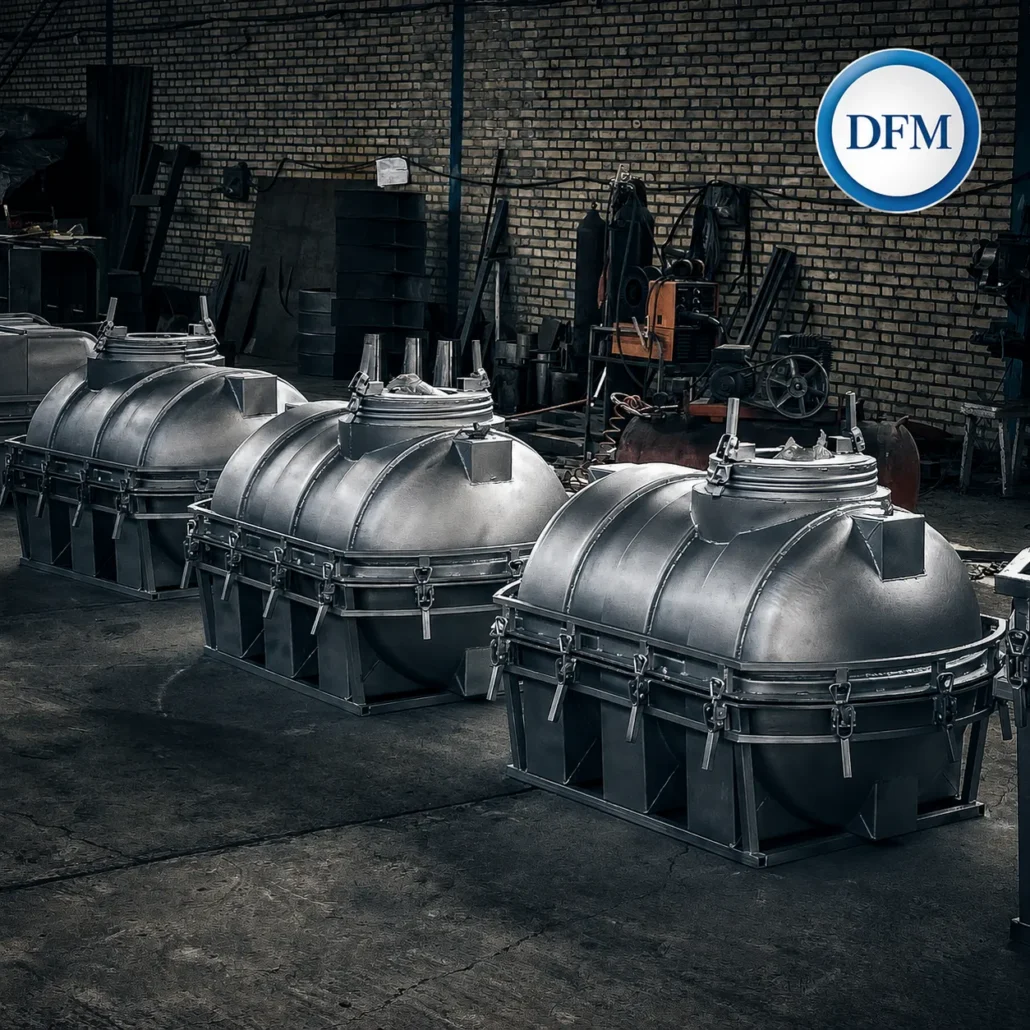
Mold design has a direct impact on the quality and consistency of Rotomolded products.
A well-engineered mold promotes uniform heat transfer, balanced material distribution, and consistent wall thickness. Poorly designed molds, on the other hand, may create localized hot spots where excessive heat accumulates, increasing the risk of burn marks and other thermal defects.
Proper mold engineering is therefore just as important as selecting the right processing parameters.
Uniform Mold Wall Thickness:
Molds with inconsistent wall thickness can absorb and transfer heat unevenly.
Thicker sections tend to retain heat longer, while thinner areas heat and cool more rapidly. These temperature differences can produce localized overheating, leading to discoloration, material degradation, and inconsistent product quality.
Using high-quality steel or aluminum with uniform wall thickness helps achieve more consistent thermal performance throughout the molding cycle.
Proper Corner Design:
Sharp corners naturally accumulate more heat than smooth, radiused corners.
These areas often become thermal concentration points where polyethylene is exposed to excessive temperatures, increasing the likelihood of burn marks and material degradation.
Incorporating generous corner radii into both the mold and part design improves heat distribution, promotes better material flow, and reduces thermal stress during processing.
The Importance of Cooling Systems in Rotomolding
The cooling stage is just as critical as the heating stage.
Improper cooling can introduce internal stresses, dimensional distortion, and residual thermal damage that negatively affect product quality.
A well-designed cooling system ensures gradual and uniform heat removal, helping preserve the mechanical properties and dimensional accuracy of the finished part.
Characteristics of an Effective Cooling System
- High-capacity cooling fans
- Uniform water spray systems when required
- Controlled cooling chamber temperature
- Balanced cooling rates to prevent thermal shock
- Consistent airflow around the mold
Proper cooling not only reduces defects but also improves cycle consistency and extends mold life.
Quality Control Checklist for Preventing Burn Marks
To minimize the risk of burn marks in Rotomolded parts, production operators and quality control engineers should routinely verify the following:
- Confirm that the actual oven temperature matches the programmed setpoint.
- Record and monitor the heating cycle for every product.
- Inspect the performance of the oven’s air circulation fans.
- Verify the quality, cleanliness, and moisture content of the polyethylene powder.
- Check molds regularly for cleanliness, damage, and surface condition.
- Calibrate PLC systems, temperature sensors, and control instruments on a scheduled basis.
- Ensure the cooling system is operating efficiently and consistently.
- Maintain detailed production records to identify process trends and prevent recurring defects.
Implementing these quality control measures helps improve product consistency, reduce scrap rates, and maintain high manufacturing standards.
The Role of High-Quality Equipment in Reducing Thermal Defects
The use of well-engineered Rotomolding equipment is one of the most effective ways to minimize thermal defects and prevent burn marks.
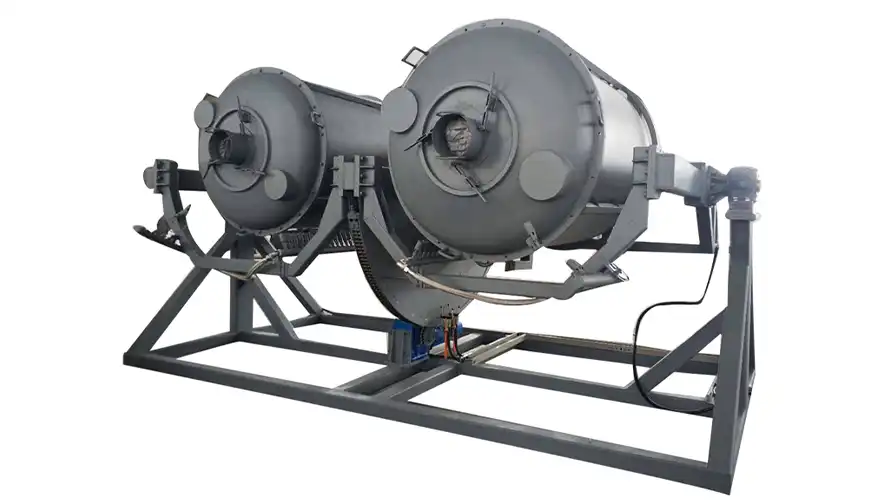
A modern Rotomolding production line equipped with high-performance ovens, efficient thermal insulation, reliable air circulation systems, precision-controlled PLC automation, and accurately synchronized rotating arms provides superior process stability and repeatability.
Consistent temperature control and uniform heat distribution allow manufacturers to produce high-quality polyethylene products while reducing production waste and operating costs.
For this reason, the design and manufacturing of a Rotomolding production line should always be carried out by experienced engineering specialists who understand both the thermal and mechanical aspects of the rotational molding process.
Davaran Fydar’s Practical Experience in Reducing Burn Marks
At Davaran Fydar Maham, we have successfully designed and manufactured numerous Rotomolding production lines for customers producing polyethylene tanks and industrial products.
One of the most common challenges encountered during these projects has been localized burn marks caused by uneven heat distribution inside the oven.
By optimizing airflow patterns, precisely controlling arm rotation speeds, and implementing advanced PLC-based temperature monitoring systems, our engineering team has significantly reduced thermal defects and improved overall product quality.
This practical experience has demonstrated that selecting high-quality equipment and applying sound engineering principles during production line design play a critical role in manufacturing Rotomolded products with consistent quality, minimal scrap, and maximum production efficiency.
Conclusion
Preventing burn marks in Rotomolded parts requires careful control of every stage of the manufacturing process, including oven temperature, heating time, raw material quality, mold design, and cooling performance.
By utilizing high-quality equipment, implementing precise process control, and following proven engineering practices, manufacturers can significantly reduce thermal defects while producing stronger, more durable polyethylene products.
If you are planning to establish a new Rotomolding facility or upgrade an existing production line, investing in properly engineered equipment and optimized process design will play a decisive role in reducing production waste, improving product quality, and maximizing manufacturing efficiency.