
Introduction to Rotational Molding
Rotational Molding is one of the most widely used and effective methods in the plastic parts manufacturing industry that has gained significant popularity in recent years. Many manufacturers, especially in the field of polyethylene water tanks, industrial equipment, and hollow products, choose this method. However, an important question often arises: Is rotational molding the best option for all products, or can other methods like injection molding, compression molding, or blow molding be more suitable?
In this article, we will comprehensively compare rotational molding with other common methods, review the advantages and disadvantages of each, and determine which process is the best fit for your specific needs.
What is Rotational Molding?
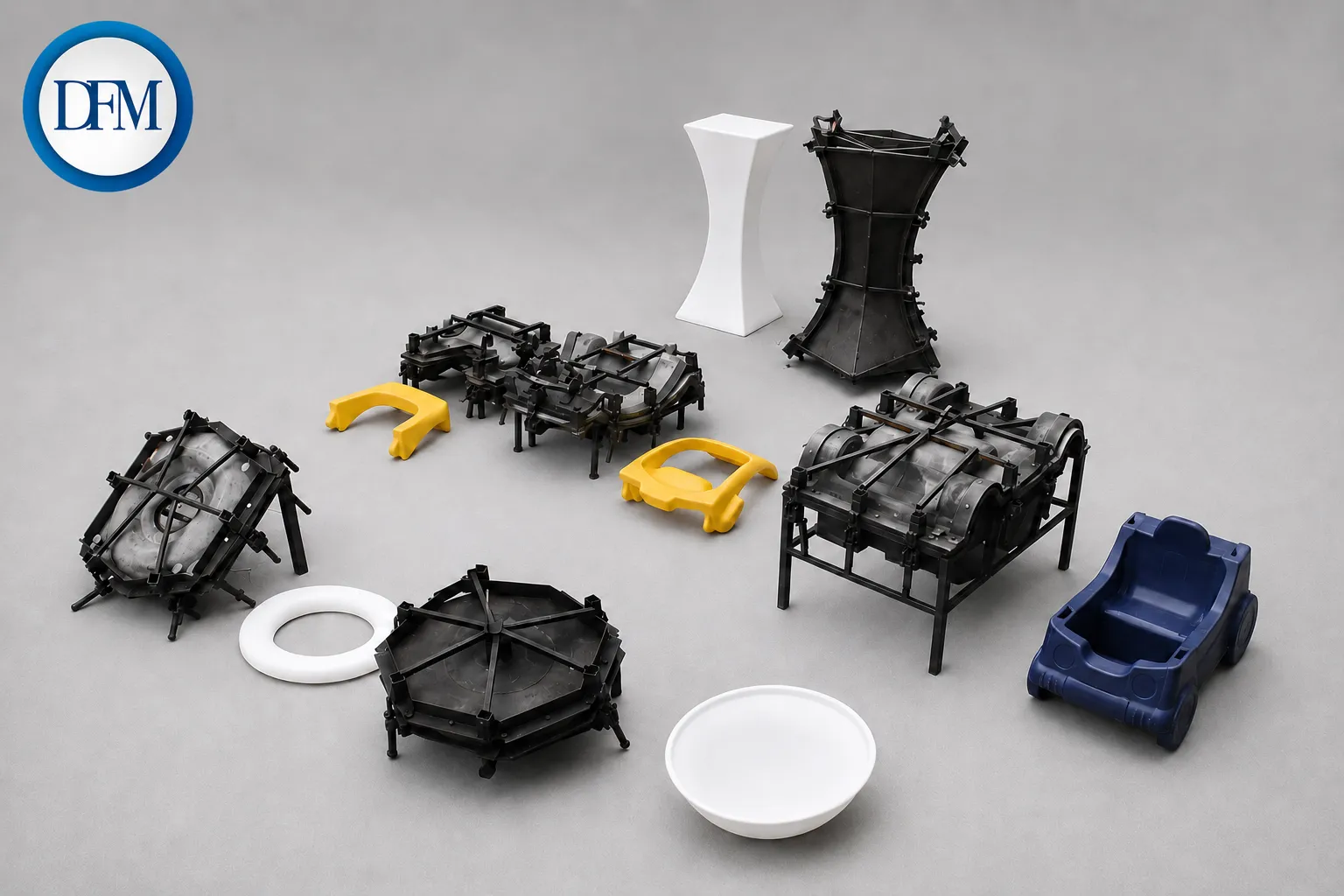
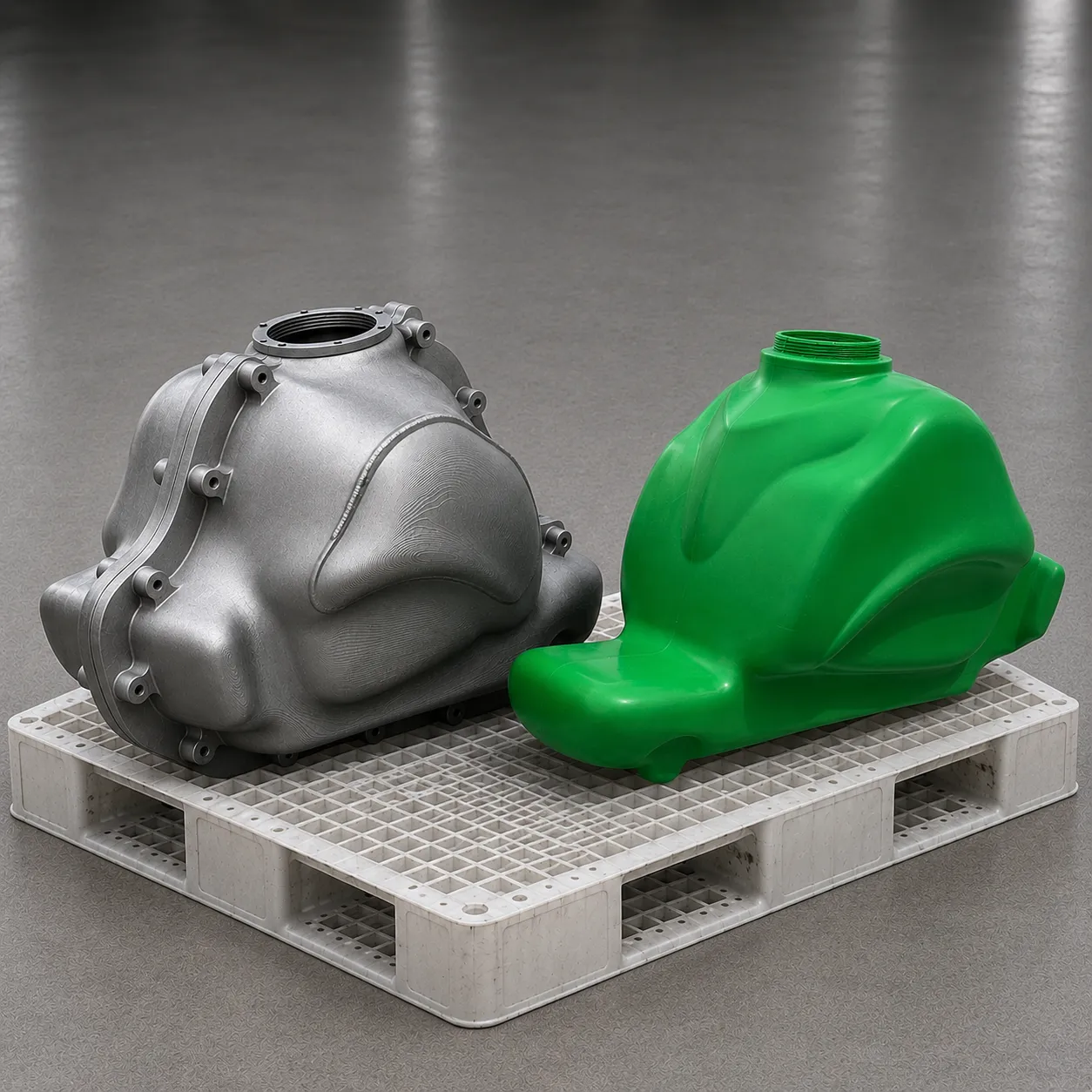
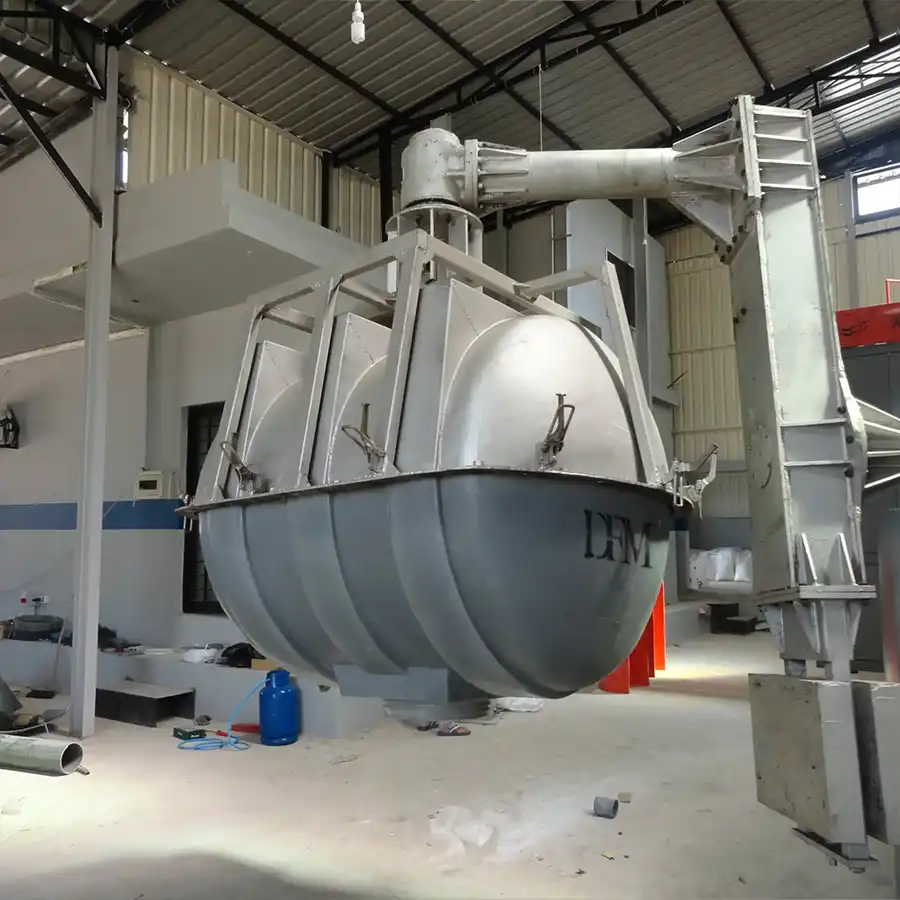
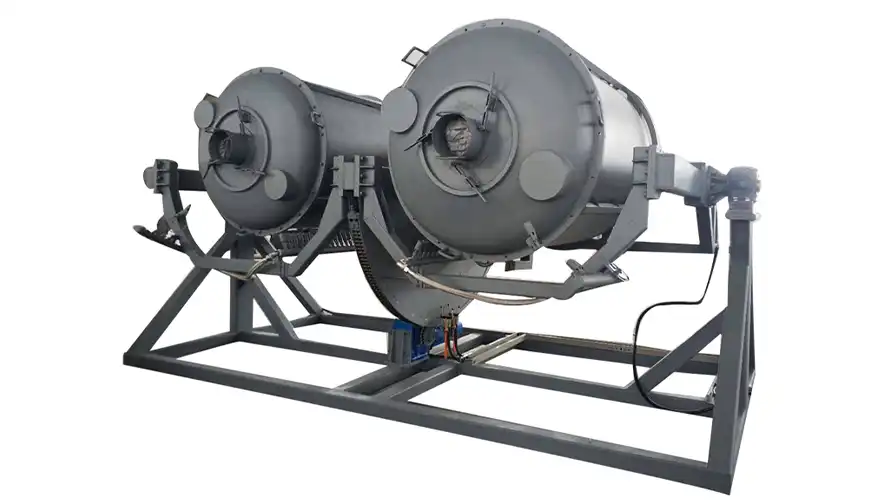
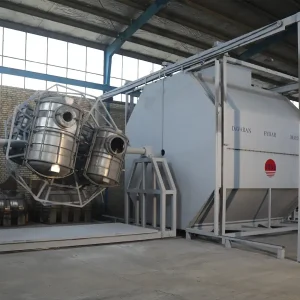
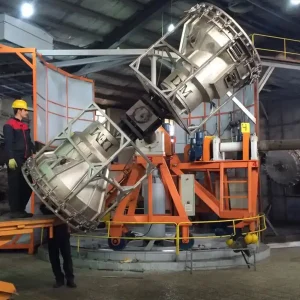
In the rotational molding process, polymer powder (usually polyethylene) is placed inside a mold. The mold is then placed in a special oven and rotates on multiple axes simultaneously. This movement causes the powder to uniformly adhere to the inner walls of the mold, and after cooling, a seamless, hollow, and durable part is formed.
The key feature of this method is its simplicity and ability to produce large and hollow parts, which is why it is commonly used for products such as:
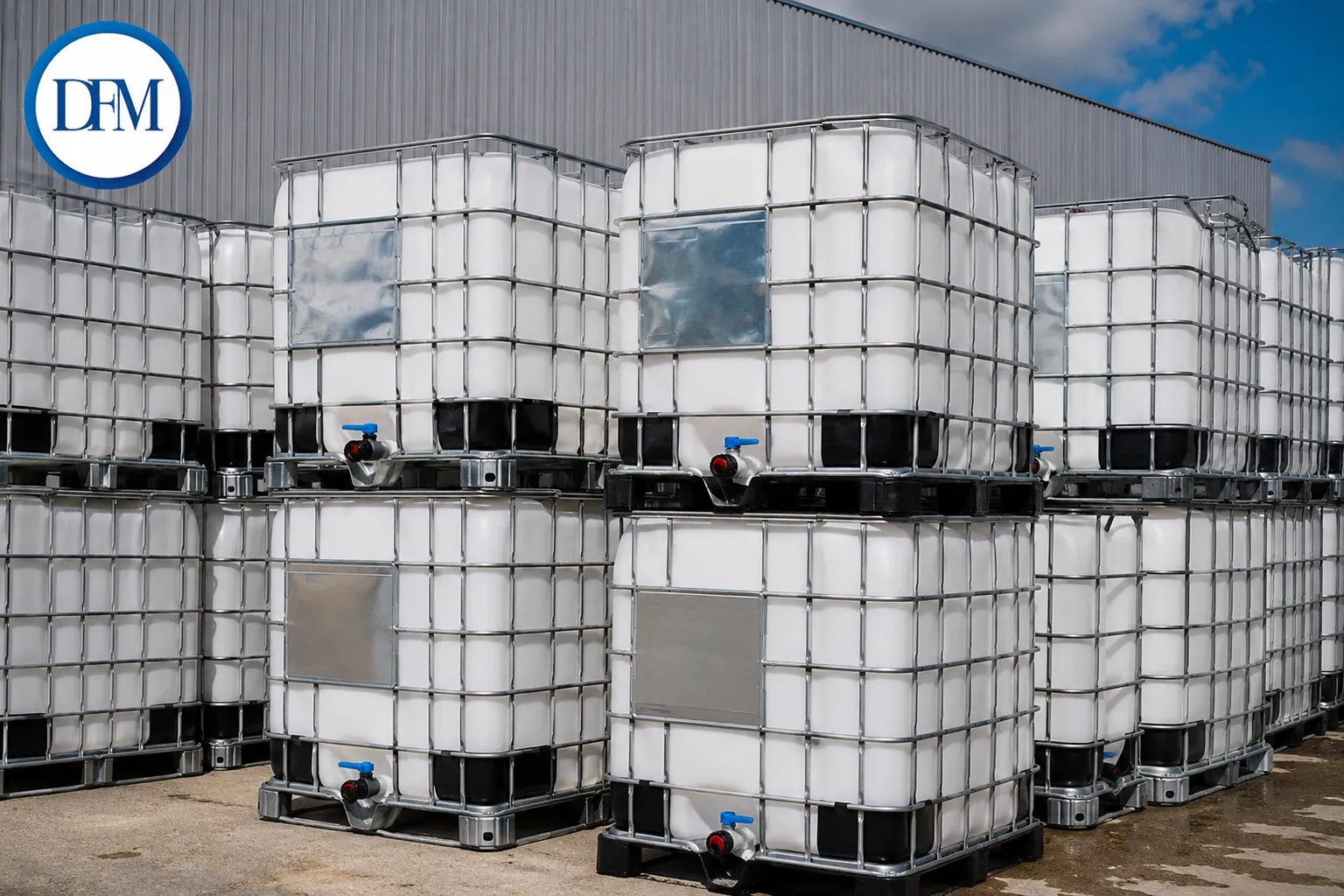
- Horizontal and vertical water tanks
- Rectangular and cubic tanks
- Plastic boats and sports equipment
- Large industrial containers
Companies like Davaran Fidar Maham have successfully utilized this method to produce a variety of high-quality products, such as 5000-liter vertical tanks, 3000-liter horizontal tanks, and 1000-liter rectangular tanks.
Advantages of Rotational Molding
Low Mold Cost
The molds used in this method are much simpler and more cost-effective than injection molds.
Suitable for Large and Bulk Parts
This method allows the production of large parts with high volumes (even several thousand liters).
High Integrity and Durability
Products manufactured via rotational molding are often seamless, which increases their resistance to pressure and leakage.
Design and Thickness Versatility
The thickness of the walls can be controlled in different sections, allowing for diverse designs.
Disadvantages of Rotational Molding
Longer Production Time
Compared to methods like injection molding, the production cycle is slower.
Limitations in Fine Details
This method is not suitable for producing small parts with high precision or intricate designs.
Higher Energy Consumption
Due to the high heat required to melt polymer powder, energy consumption in this method is higher.
Comparing Rotational Molding with Injection Molding
What is Injection Molding?
Injection Molding is one of the most widely used and advanced methods for producing plastic parts. In this process, molten thermoplastic material is injected under high pressure into a mold. After cooling, the solid part is ejected from the mold.
This method is ideal for producing small, precise parts in high volumes and is commonly used in industries such as:
- Automotive parts (dashboards, bumpers)
- Medical equipment (syringes, tool housings)
- Household appliances
- Electronics (connectors, housings)
Advantages of Injection Molding
- High Precision and Fine Details: It allows for the production of intricate parts with precise geometries and very tight tolerances.
- Fast Production Cycle: Ideal for mass production and quick turnaround times.
- Excellent Surface Quality: The parts produced have a smooth, uniform surface.
- Suitable for Automation: Due to its high automation capabilities, labor costs are reduced.
Disadvantages of Injection Molding
- High Mold Costs: Injection molds are complex and expensive, requiring significant upfront investment.
- Not Suitable for Large Parts: This method is more suitable for small to medium-sized parts.
- Material Limitations: While various materials are used, producing very large parts with polyethylene is not economical in this method.
Comparing Rotational Molding and Injection Molding
| Features | Rotational Molding | Injection Molding |
| Mold Cost | Low and economical | Very high |
| Production Volume | Medium to low | Very high |
| Part Size | Large and bulky | Small to medium |
| Fine Details | Limited | Highly precise |
| Production Speed | Slower cycle | Faster cycle |
| Common Applications | Polyethylene tanks, hollow parts | Automotive parts, medical equipment, electronics |
Conclusion of This Section
If the goal is to produce large, bulky parts such as a 3000-liter water tank or a 5000-liter horizontal tank, rotational molding is the best choice. However, if you need small, precise parts in high volumes, injection molding is more suitable.
Comparing Rotational Molding with Blow Molding
What is Blow Molding?
Blow Molding is a method primarily used for producing hollow parts such as bottles, jugs, and small tanks. In this process, a hot plastic tube (preform or parison) is first created, then blown into a mold by air pressure to form the final shape.
This method shares similarities with rotational molding as both are used for hollow parts, but there are significant differences in production volume, part size, and product quality.
Advantages of Blow Molding
- Faster Production: The cycle time is quicker compared to rotational molding.
- Cost-Effective for Mass Production: Especially in packaging industries such as beverage bottles or fuel containers.
- Lightweight Parts: Parts produced are lighter in weight.
Disadvantages of Blow Molding
- Limited Part Size: It is more suitable for small to medium-sized parts; large tanks are not feasible.
- Less Control Over Wall Thickness: The wall thickness may not be as uniform.
- Lower Durability: Parts are less durable compared to rotational molding.
Comparing Rotational Molding and Blow Molding
| Features | Rotational Molding | Blow Molding |
| Part Size | Large and bulky | Small to medium |
| Wall Thickness | Uniform and controllable | Less uniform |
| Production Speed | Slower cycle | Faster cycle |
| Strength and Durability | High, suitable for outdoor use | Lower, short-term use |
| Mold Cost | Lower | Medium |
| Common Applications | Horizontal and vertical tanks, plastic boats | Bottles, fuel containers, packaging |
Conclusion of This Section
For large, durable tanks and products that need to withstand outdoor conditions or mechanical pressure, rotational molding is the best option. On the other hand, blow molding is ideal for lightweight, small products like bottles or jugs that require rapid production.
Comparing Rotational Molding with Compression Molding
What is Compression Molding?
Compression Molding is used primarily for producing solid, dense parts with high mechanical resistance. In this process, plastic or composite material is preheated and placed into a mold, which is then closed under pressure and heat to form the final part.
This process is typically used for industrial parts or those that need to withstand high pressure and temperature, rather than for hollow and bulky parts.
Advantages of Compression Molding
- High Strength and Durability: Parts produced have exceptional mechanical resistance.
- Lower Mold Cost Compared to Injection Molding: Initial setup is cheaper.
- Suitable for Thick, Industrial Parts: Such as automotive parts and electrical equipment.
Disadvantages of Compression Molding
- Slower Production Speed: The production cycle is longer.
- Limited Complexity: Better suited for simpler parts; complex designs are difficult to produce.
- Limited Use for Hollow Parts: Not suitable for producing large hollow products like water tanks.
Comparing Rotational Molding and Compression Molding
| Features | Rotational Molding | Compression Molding |
| Part Type | Hollow, bulky (water tanks, plastic boats) | Solid, dense (washers, automotive parts) |
| Part Size | Large and bulky | Usually small to medium |
| Strength | High but light | Very high and dense |
| Design Complexity | Free and intricate | Limited to simple parts |
| Production Speed | Medium to slow | Slower |
| Common Applications | 5000-liter horizontal tank, urban equipment | Automotive panels, electrical components, washers |
Conclusion of This Section
Compression molding is more suitable for durable, industrial parts, but it has no place in producing large hollow products. In contrast, rotational molding is the primary choice for producing large, hollow polyethylene tanks and outdoor equipment.
Comparing Rotational Molding with Thermoforming
What is Thermoforming?
Thermoforming is a process in which plastic sheets are heated to soften them, then shaped using a mold and pressure or vacuum. Once cooled, the desired part is produced.
This process is mostly used for flat, shallow parts or packaging products and, unlike rotational molding, is not suitable for large, hollow parts.
Advantages of Thermoforming
- Low Production Cost for Thin Parts:
Suitable for producing packaging and simple parts with medium production volumes. - High Production Speed:
The production cycle is shorter compared to many other methods. - Flexibility in Designing Flat Parts:
Capable of producing parts with various shapes, especially in the packaging industry.
Disadvantages of Thermoforming
- Limitations in Thickness and Size:
Not suitable for thick, bulky, or large parts. - Lower Strength Compared to Other Methods:
Parts produced typically have lower mechanical strength. - Material Waste:
Significant material wastage occurs during the sheet cutting process.
Comparing Rotational Molding and Thermoforming
| Features | Rotational Molding | Thermoforming |
| Type of Parts | Hollow, bulky (Tanks, Plastic Boats) | Flat, shallow (Trays, Packaging) |
| Part Size | Large and very bulky | Small to medium |
| Wall Thickness | Uniform and controllable | Thin and limited |
| Strength | High and durable | Lower and more brittle |
| Production Speed | Medium to slow | Faster cycle |
| Common Applications | 10,000-liter vertical tank by Davaran Fidar, Industrial Containers | Packaging trays, Household appliance parts |
Conclusion of This Section
Thermoforming is mostly used in the packaging industry and for producing thin parts. It is not a suitable alternative for producing large and hollow parts. In contrast, rotational molding is the main choice for producing polyethylene tanks, industrial containers, and bulky products. Therefore, in heavy industries and products requiring high durability, rotational molding holds a clear advantage.
Comparing Rotational Molding with Extrusion
What is Extrusion?
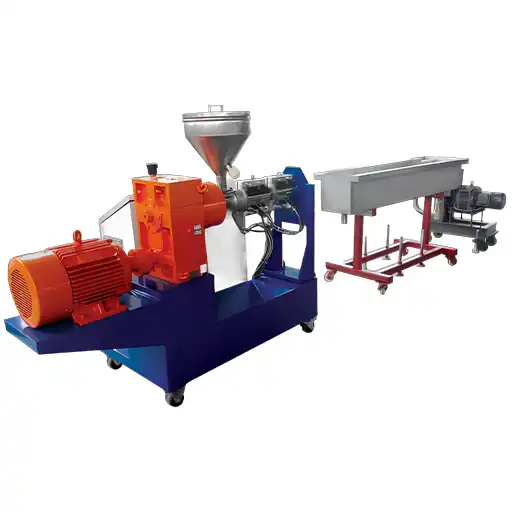
Extrusion is one of the oldest and most widely used plastic shaping methods. In this process, molten thermoplastic material is pushed through a die under pressure to form a continuous shape (such as pipes, profiles, or sheets).
Unlike rotational molding, this method does not produce large hollow parts but is used for producing linear and continuous products.
Advantages of Extrusion
- Continuous Production and High Volume:
Allows uninterrupted production of products such as pipes and profiles. - Low Production Cost:
Especially economical for simple, linear parts. - Versatility in Profiles:
Can produce various pipes, sheets, and profiles with different shapes.
Disadvantages of Extrusion
- Limitations in 3D Shapes:
Not suitable for producing bulky and complex parts. - Post-processing Equipment Required:
Many products require cutting or further shaping after extrusion. - No Production of Large Hollow Tanks and Parts:
Unlike rotational molding, extrusion cannot produce polyethylene tanks or plastic boats.
Comparing Rotational Molding and Extrusion
| Features | Rotational Molding | Extrusion |
| Type of Parts | Hollow and bulky (Tanks, Containers, Boats) | Linear and continuous (Pipe, Profile, Sheet) |
| Part Size | Large and bulky | Long but with a fixed cross-section |
| Production Volume | Medium to low | Very high (continuous) |
| Design Complexity | Free and intricate | Limited to simple shapes and fixed cross-sections |
| Strength | High and durable | Dependent on thickness and material type |
| Common Applications | 5000-liter horizontal tank by Davaran Fidar, Plastic Boat | Water and gas pipes, UPVC window profiles |
Conclusion of This Section
Extrusion is the best choice for producing linear and continuous parts, such as pipes, profiles, and sheets, but has no place in producing bulky and hollow parts. In contrast, rotational molding excels in producing large, hollow products with versatile designs. Therefore, these two methods are complementary and are often used together in various industries.
Why the Right Choice Matters
From our review of all the plastic manufacturing methods, it’s clear that no single method is the best for every case. Each of rotational molding, injection molding, blow molding, compression molding, extrusion, thermoforming, and other methods has its own unique strengths and weaknesses.
- If you need mass-produced, precise small parts, injection molding is the best option.
- If you need lightweight hollow parts, blow molding is the most practical choice.
- If you require thick, compact, and durable parts, compression molding is the right choice.
- For thin-walled packaging or simple parts, thermoforming is suitable.
However, if you need large, hollow, durable parts at a low mold cost, rotational molding is the best option.
Therefore, in industries like those served by Davaran Fidar Maham, rotational molding offers a cost-effective, practical, and flexible solution for producing high-quality, large-scale plastic products.
Industrial Applications of Rotational Molding in the world
In Iran, companies such as Davaran Fidar Maham have successfully utilized rotational molding technology to produce a wide range of functional and industrial products, including:
- Polyethylene Water Tanks
Available in various capacities ranging from 500 liters to 20,000 liters. - Rectangular and Horizontal Tanks
Specifically designed for limited spaces and under stairs. - Vertical Industrial Tanks
Used for storing chemicals and drinking water. - Custom Industrial Parts
Such as agricultural equipment or large urban components (e.g., park slides and urban furniture).
This diversity demonstrates that rotational molding has not only found a place in large industries but also in domestic and urban sectors in Iran.
The Future of Rotational Molding and Other Methods
With the increasing demand for lightweight, durable, and cost-effective products, it is predicted that rotational molding will continue to experience significant growth. Several key trends for the future of this industry include:
- Introduction of Biodegradable Materials and Composites
More eco-friendly alternatives. - Automation and Artificial Intelligence
Reducing production time and improving quality. - Expansion of Applications
Use in emerging industries such as renewable energy and advanced storage equipment.
On the other hand, other methods such as injection molding and blow molding are also being optimized with new technologies. Therefore, the future of the plastic industry will be a combination of competition and evolution between these methods.
Final Summary
Choosing between rotational molding or other methods depends on factors such as the type of product, production volume, mold cost, mechanical properties, and production time.
- If the goal is to produce large and durable tanks such as a 5000-liter horizontal tank or a 1000-liter rectangular tank, then rotational molding is the best choice.
- If the goal is to produce small, precise parts in high volumes, injection molding or blow molding would be more suitable.
- If the goal is to create compact industrial parts, compression molding is recommended.
Ultimately, rotational molding is an economical, practical, and flexible solution in the current plastic industry in Iran. Companies like Davaran Fidar Maham, with their experience and advanced equipment, have made it one of the main pillars for producing large tanks and plastic parts.