
1.Rotational Molding in the Automotive Industry
The automotive industry has always sought innovative methods to reduce vehicle weight, improve component durability, and optimize production costs. One of the technologies that has gained significant traction in recent years is the application of rotational molding in the automotive sector. This method not only enables the production of large, hollow parts with high strength, but also offers great flexibility in the design and manufacturing of specialized automotive components.
With increasingly stringent standards on fuel consumption, emissions, and safety, automakers are looking for solutions that maintain quality while reducing overall vehicle weight. The use of polymers and polymer-based components in vehicle bodies and interior systems is one such solution, and rotational molding—commonly referred to as rotomolding—is an ideal process for achieving these objectives.
This article provides a comprehensive overview of this technology, the challenges of applying it in automotive manufacturing, and the technical solutions that can enhance performance and product quality.
2.Overview of the Rotational Molding Process
To better understand its applications in the automotive industry, it is important to first review the principles and stages of rotational molding. Rotational molding is a thermal plastic forming process used to manufacture hollow components with relatively uniform wall thickness.
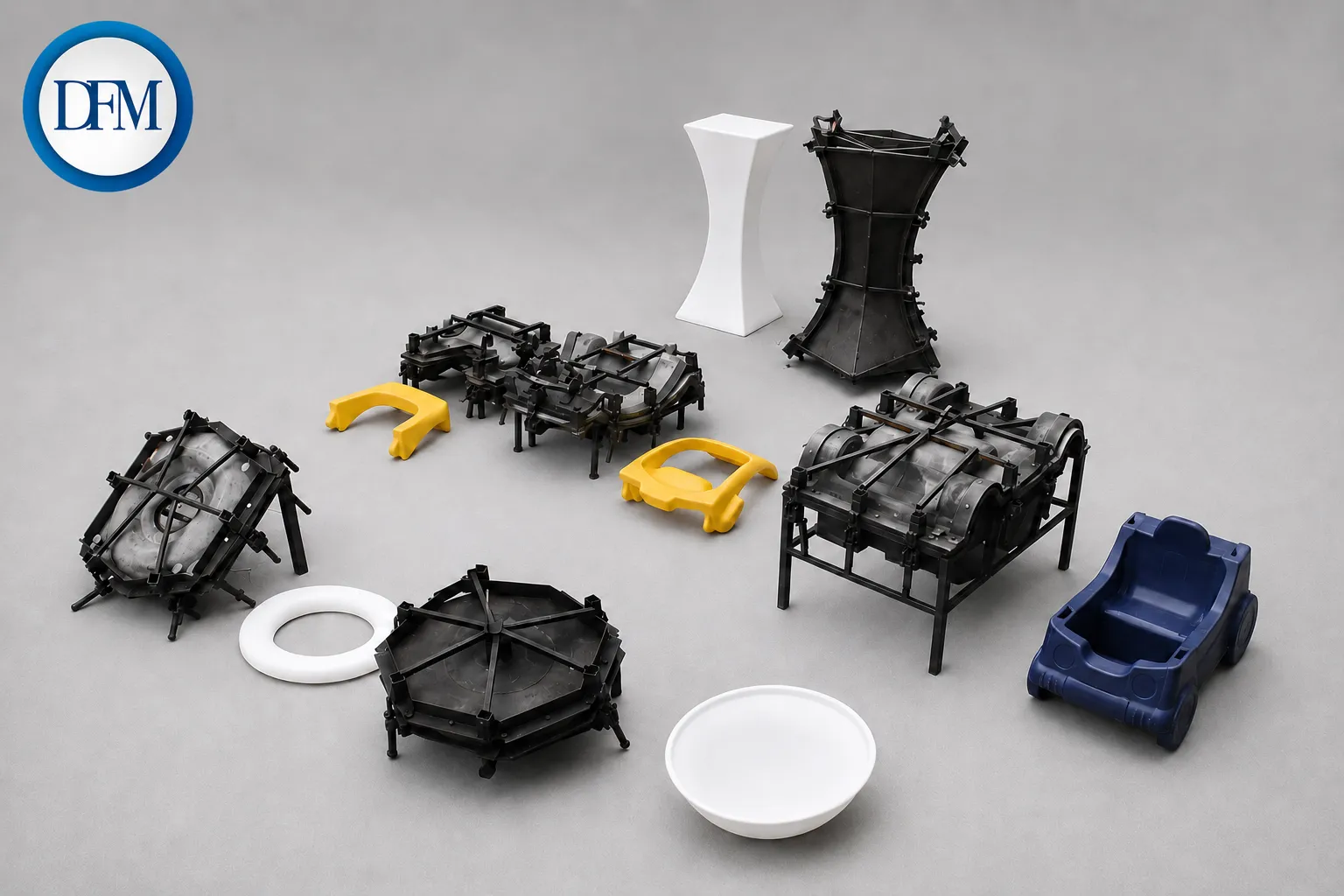
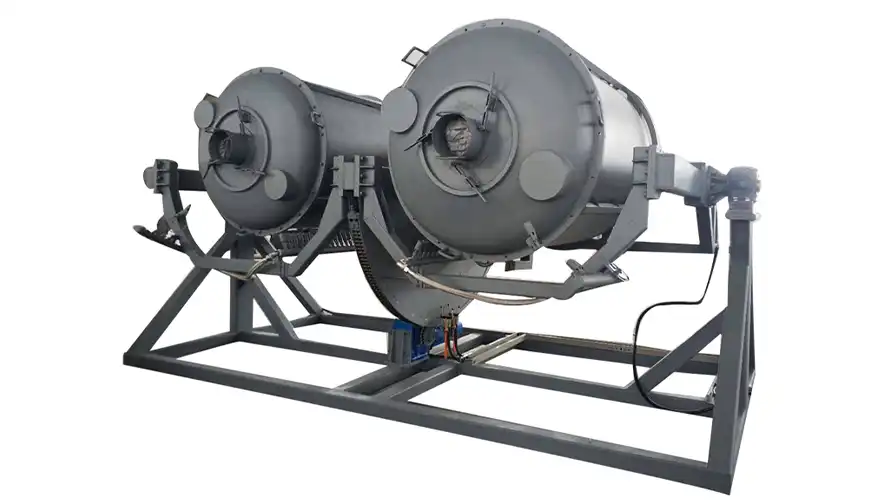
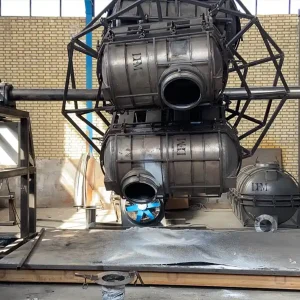
In this process, a powdered polymer (typically polyethylene or similar compounds) is loaded into a metal mold. The mold is then placed inside a large oven while rotating simultaneously around two axes. This continuous rotation ensures that the melted powder evenly coats the inner surface of the mold. Once the heating stage is complete, the mold is cooled so the part solidifies into its final shape, after which the mold is opened and the component is removed.
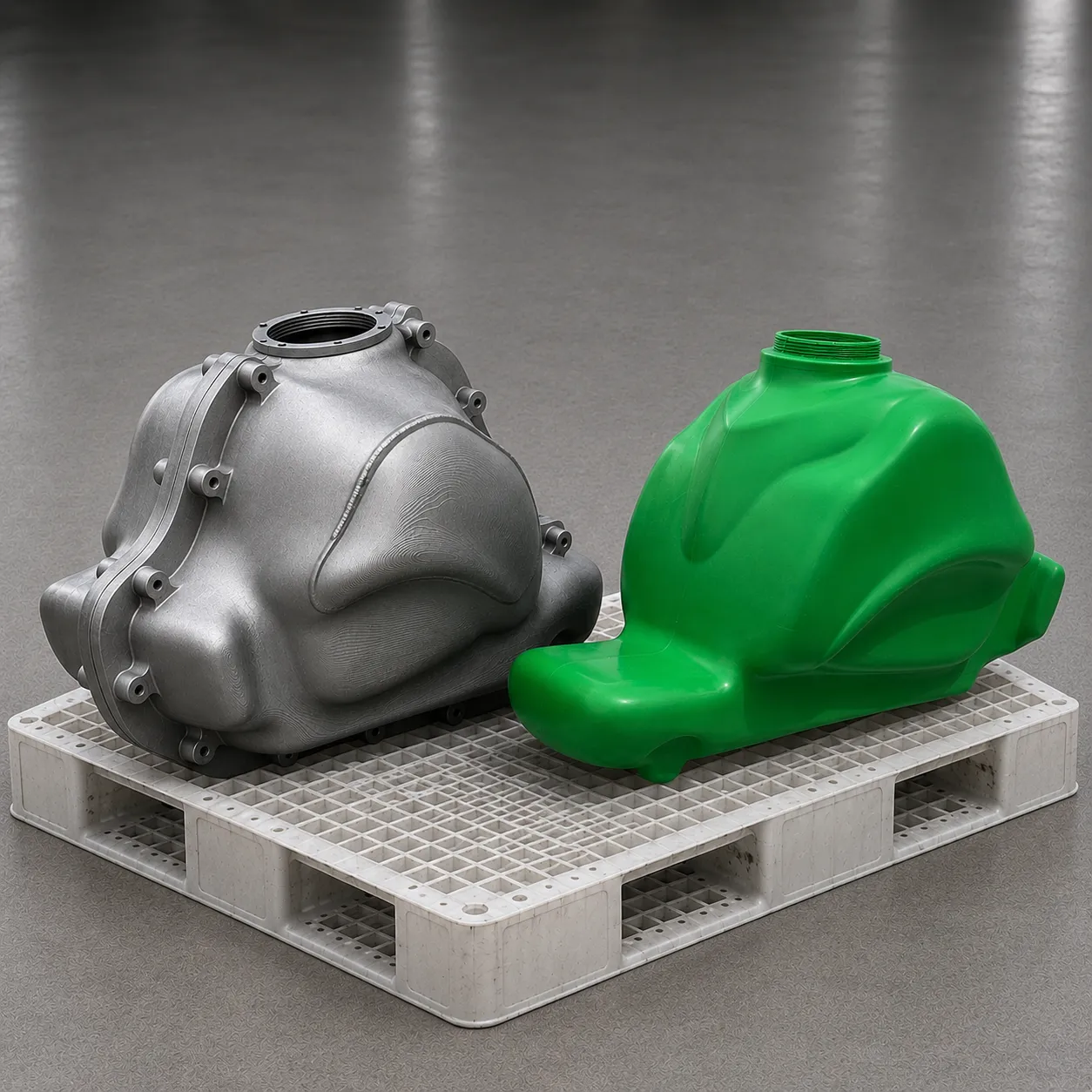
The main distinction between rotational molding and other plastic forming techniques—such as injection molding or blow molding—lies in its low-pressure operation and capability to produce very large and complex components. For this reason, parts such as plastic fuel tanks, AdBlue reservoirs, and certain automotive body components are widely produced through this method.
3.Key Applications of Rotational Molding in the Automotive Industry
3.1 Plastic Fuel Tanks
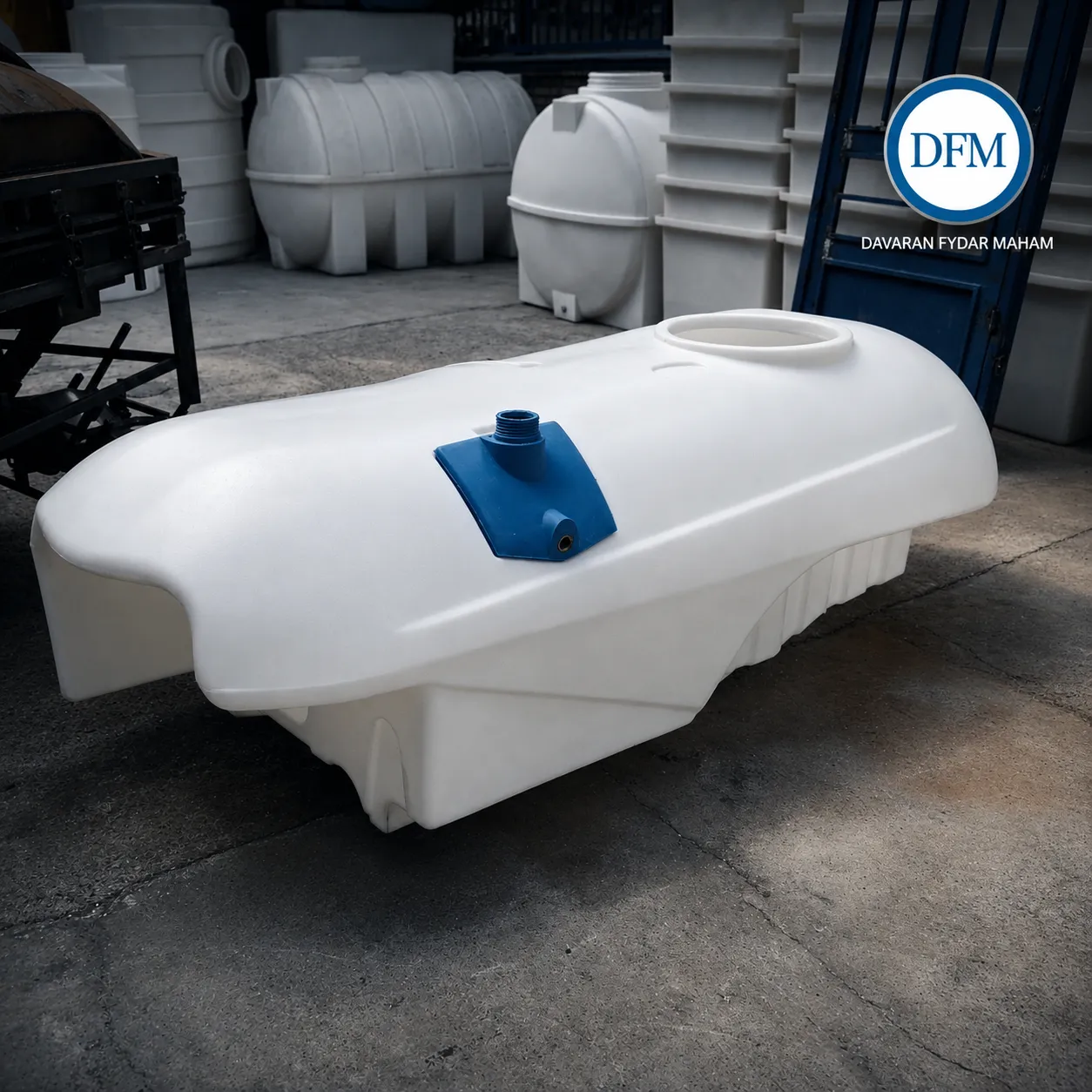
One of the most critical parts manufactured through rotomolding is the plastic fuel tank. Compared to their metal counterparts, these tanks are lighter, corrosion-resistant, and can be designed in complex shapes, making them the preferred choice in modern vehicles.
3.2 AdBlue Tanks
In modern diesel vehicles, the AdBlue tank is essential for reducing exhaust emissions. These tanks are produced using rotational molding due to their required chemical resistance and the need for precise shapes that fit within limited vehicle spaces.
3.3 Decorative and Auxiliary Components
Certain exterior plastic parts such as specialized fenders, toolboxes, and storage compartments are manufactured using this process, as rotomolding provides significant freedom in design.
3.4 Specialized Fluid Reservoirs
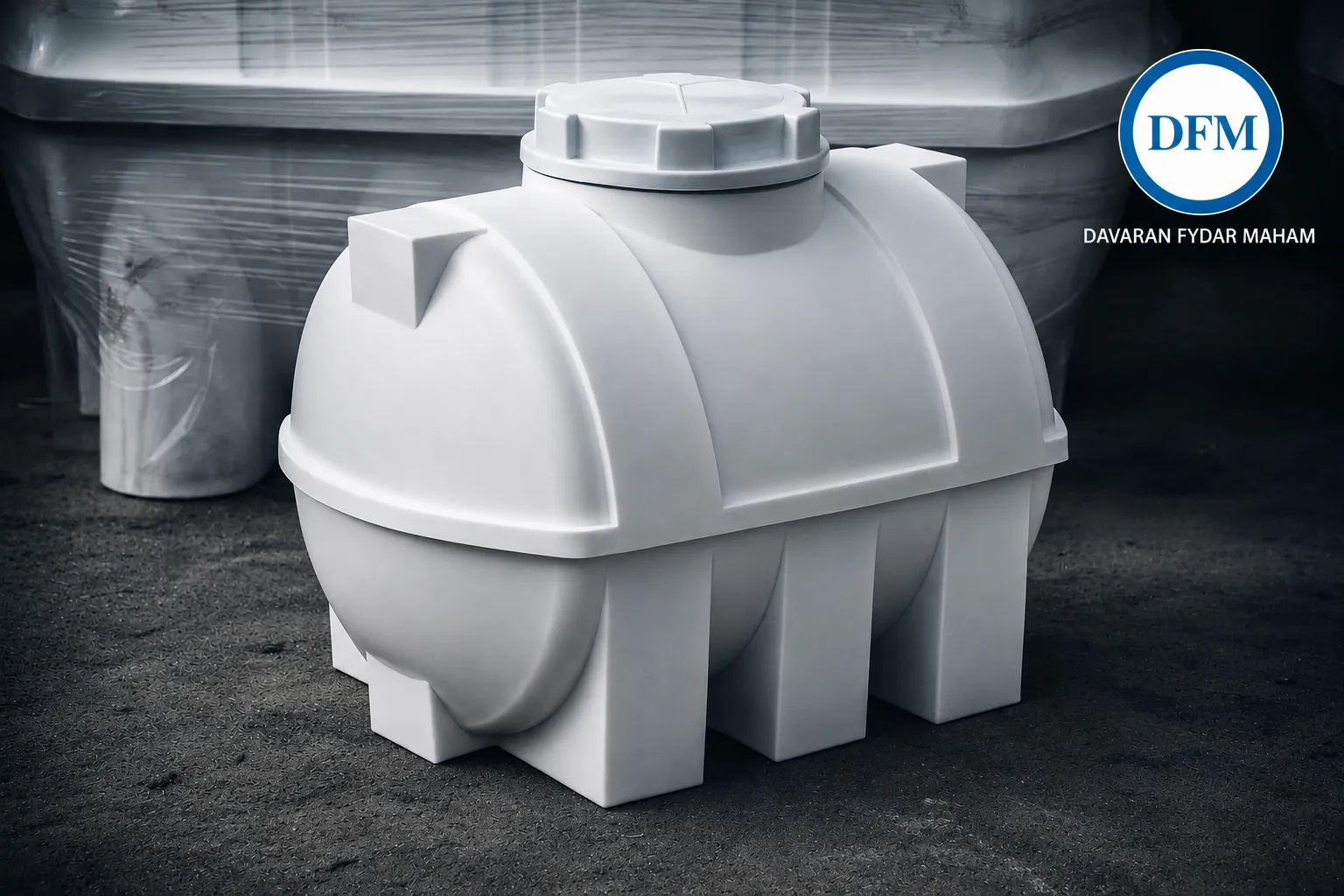
Heavy-duty vehicles and industrial machinery often require reservoirs for coolant or hydraulic fluids. Rotational molding enables the production of durable tanks capable of withstanding variable temperatures and pressures.
4.Technical Challenges in Producing Automotive Components with Rotomolding
4.1 Wall Thickness Control
Achieving uniform wall thickness is one of the most difficult aspects of this process. Any variations can lead to weak spots or reduced structural strength.
4.2 Surface Finish and Final Appearance
Due to the nature of the process, obtaining highly smooth and glossy surfaces is more challenging than with other molding methods. This can pose issues for visible automotive components.
4.3 Material Limitations
Although polyethylene and some thermoplastics perform well, the range of materials suitable for rotational molding is limited, making it difficult to use specialized polymers resistant to fuels or certain chemicals.
4.4 Longer Production Cycles
Heating and cooling times in rotomolding are typically longer than in injection molding, reducing production capacity and potentially increasing costs.
5.Technical Solutions for Overcoming Production Challenges
5.1 Optimized Mold Design
Using advanced simulation software and reverse engineering, mold designs can be optimized to predict material flow and potential weak spots, addressing problems before actual production.
5.2 Improved Raw Materials
Enhancing polyethylene with thermal stabilizers, UV-resistant pigments, and reinforcing additives improves the strength and durability of finished parts. Multi-layer structures can also be used in components such as fuel tanks for added protection.
5.3 Precise Control of Temperature and Time
Digital control systems and thermal sensors enable precise regulation of oven temperatures and mold rotation cycles, ensuring uniform thickness and better surface quality.
5.4 Skilled Workforce Training
Operators of rotomolding machines should be trained in process fundamentals, common issues, and troubleshooting techniques. Specialized training reduces errors and enhances overall product quality.
6.Comparison of Rotational Molding with Other Plastic Manufacturing Methods
6.1 Injection Molding
Injection molding offers faster production and is better suited for smaller, highly detailed parts. However, rotomolding outperforms in the production of large, hollow, and freely designed components.
6.2 Blow Molding
Blow molding is also used for hollow parts but offers less flexibility in complex designs and provides weaker wall thickness control compared to rotomolding.
6.3 Mold Cost Advantages
Rotomolding molds are generally less expensive and more durable due to the low-pressure process, making them suitable for small production runs and customized components.
7.The Future of Rotational Molding in Automotive Manufacturing
7.1 Alignment with Electric Vehicle Production
As the electric vehicle market grows, there is a greater demand for lightweight reservoirs for cooling systems, heating circuits, and specialized structural parts. Rotomolding’s ability to produce lightweight hollow parts makes it ideal for these applications.
7.2 Eco-Friendly Materials
Research is ongoing into biodegradable polymers and recycled materials, which can push rotational molding towards a more sustainable path and help automakers meet environmental regulations.
7.3 Smart Manufacturing Technologies
Integrating IoT sensors into molds and machinery allows real-time monitoring of temperature, pressure, and wall thickness, dramatically improving product quality.
8.The Role of Rotational Molding in Innovative Vehicle Design
8.1 Design Freedom
Because the process is conducted under low pressure, molds can accommodate unconventional and highly complex geometries. This gives designers more flexibility to create curved, asymmetrical, or multi-functional parts.
8.2 Multi-Functional Integration
Rotomolding enables combining several functions into a single component—for instance, a reservoir with built-in compartments for sensors or auxiliary equipment.
8.3 Improved Safety and Performance
Rotomolded components can withstand impacts and extreme conditions such as high temperatures or pressure, making them highly suitable for heavy-duty and off-road vehicles.
9.Case Studies of Successful Rotomolding Applications in Automotive
9.1 Plastic Fuel Tanks
Rotomolded fuel tanks have replaced metal alternatives thanks to their corrosion resistance, lighter weight, and versatile designs. This shift has reduced overall vehicle weight and improved fuel efficiency.
9.2 AdBlue Tanks in Diesel Vehicles
Rotomolded AdBlue tanks offer superior chemical resistance and long service life, making them the standard in emission control systems.
9.3 Cargo and Storage Components in Commercial Vehicles
Toolboxes, holders, and storage compartments in trucks and vans are increasingly produced through rotomolding due to their durability against impact and temperature changes.
10.Conclusion
In summary, rotational molding has secured a strong position in the automotive industry thanks to its design flexibility, cost-effective molds, capability to produce large hollow parts, and adaptability to durable materials.
With ongoing advancements in materials and process technologies, this method is expected to play an even greater role in electric vehicle production, lightweight vehicle design, and environmentally sustainable manufacturing. Additionally, its potential for customized production makes rotomolding a transformative technique in areas requiring innovation and specialized design.
As quality control improves and manufacturers become more familiar with the process, its application will extend beyond specific components to a broader range of automotive designs and production strategies.