Introduction: Why Design Matters in Rotational Molding?
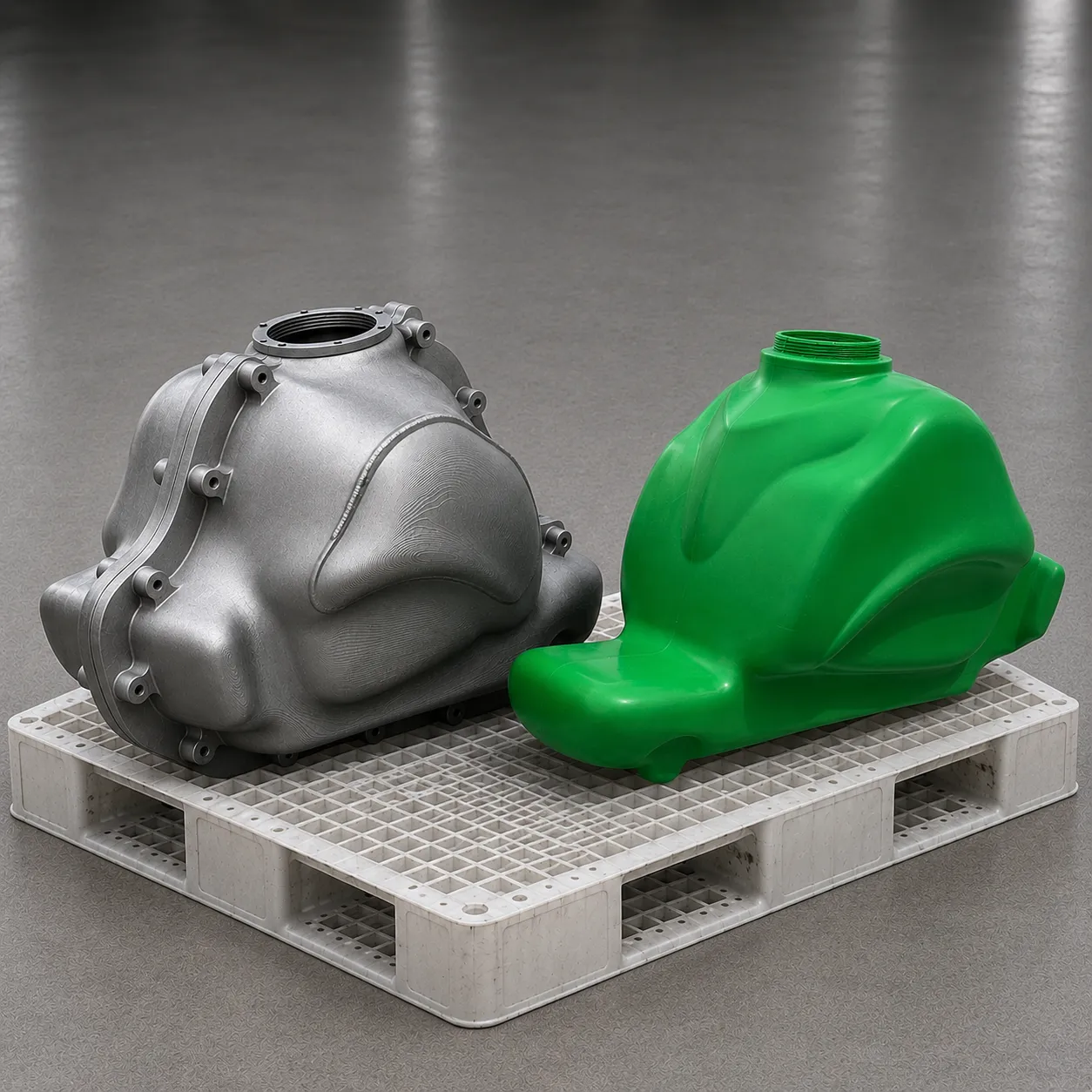
Rotational molding part design is one of the most critical stages in the production of hollow plastic products. Unlike other molding processes, rotational molding does not rely on high pressure to shape the material. Therefore, the success or failure of a product largely depends on the quality of its design.
Failure to follow proper design principles can lead to issues such as non-uniform wall thickness, mechanical weakness, leakage, and part deformation.
Uniform Wall Thickness: The Key to Quality in Rotomolding
One of the most important principles in rotomolded part design is maintaining consistent wall thickness throughout the component.
Why uniform thickness matters:
-
Prevents warpage during cooling
-
Improvest impact resistance and structural strength
-
Optimizes raw material usage and reduces production costs
Design strategies for thickness consistency:
-
Avoid sudden thickness transitions
-
Use gradual thickness changes in transition areas
-
Use ribs to increase strength instead of thickening critical sections
Corner Radius Design in Rotational Molding
Corner radius design plays a vital role in final part quality. Sharp corners create stress concentration and reduce mechanical performance.
Benefits of rounded corners:
-
Higher strength due to better stress distribution
-
Improved material flow, allowing polyethylene powder to distribute evenly
-
Increased part lifespan and resistance to cracking
Recommended radius guidelines:
-
Internal radius = at least 2× wall thickness
-
External radius = wall thickness + internal radius
Thread Design in Rotomolded Parts
Creating threads in rotomolded parts can be challenging because the process does not offer the dimensional precision of injection molding.
Thread creation methods:
-
Metal inserts placed inside the mold before processing
-
Post-machining after part production
-
Designing coarse, rounded plastic threads
Key design considerations:
-
Internal threads are best implemented using metal inserts
-
External threads should be coarse and rounded
-
Sealing applications require O-rings or gaskets
Designing for Mold Release
Rotomolded parts must be designed to allow easy mold opening without part sticking.
Design guidelines:
-
Draft angle is essential for walls
-
Protrusions and recesses must consider demolding direction
-
Multi-part molds are recommended for complex geometries
Venting and Air Release in Mold Design
Proper venting is essential to prevent bubbles, burn marks, and surface defects.
Why venting is important:
-
Allows gases generated during heating to escape
-
Prevents bubble formation
-
Ensains smooth, uniform surface finish
Design solutions:
-
Small vent holes in air-trap areas
-
Heat-resistant filters to prevent material loss
-
Air release paths placed in non-visible areas
Designing for Insert Integration
Many rotomolded products require integration of metal or additional components (inserts).
Types of inserts:
-
Threaded metal inserts for connections
-
Reinforcement inserts for structural support
-
Sealing inserts to prevent leakage
Design considerations:
-
Inserts must be positioned before material loading
-
Proper base design prevents insert movement
-
Use corrosion-resistant and heat-resistant inserts
External Surface Design and Aesthetic Details
Appearance plays a major role in market acceptance alongside functionality.
Key surface design factors:
-
Surface textures (matte or textured) reduce scratches
-
Logos and markings can be molded directly into the tool
-
UV-resistant pigments improve durability
Industry applications:
-
Anti-slip polyethylene tanks
-
Urban products with embossed logos
-
Consumer products with aesthetic color design
Material Shrinkage and Dimensional Changes
Polyethylene and other rotomolding materials shrink after cooling.
Problems caused by shrinkage:
-
Dimensional inaccuracies
-
Visual deformation
-
Difficulty in demolding
Design strategies:
-
Account for material shrinkage rate (typically 2–4% for polyethylene)
-
Increase draft angles
-
Use precision mold design
Designing for Assembly and Connections
Many rotomolded parts must connect to other components or equipment.
Connection design principles:
-
Use flanges and edges for bolts or plastic welding
-
Design O-ring and gasket seats for sealing
-
Plan thermal or ultrasonic welding areas
Application examples:
-
Tank lid connections
-
Attachment of accessories such as handles or bases
-
Multi-part product assembly
Designing with End-Use in Mind
Each rotomolded part must be designed according to real operating conditions.
Key factors:
-
Environmental conditions (UV, humidity, chemicals)
-
Load type (internal pressure or external load)
-
Safety requirements, especially for sensitive applications such as potable water tanks
Conclusion
Smart design in rotational molding increases product lifespan, reduces production costs, and improves customer satisfaction.
By following proper design principles, manufacturers can achieve higher quality, better performance, and more reliable rotomolded products.